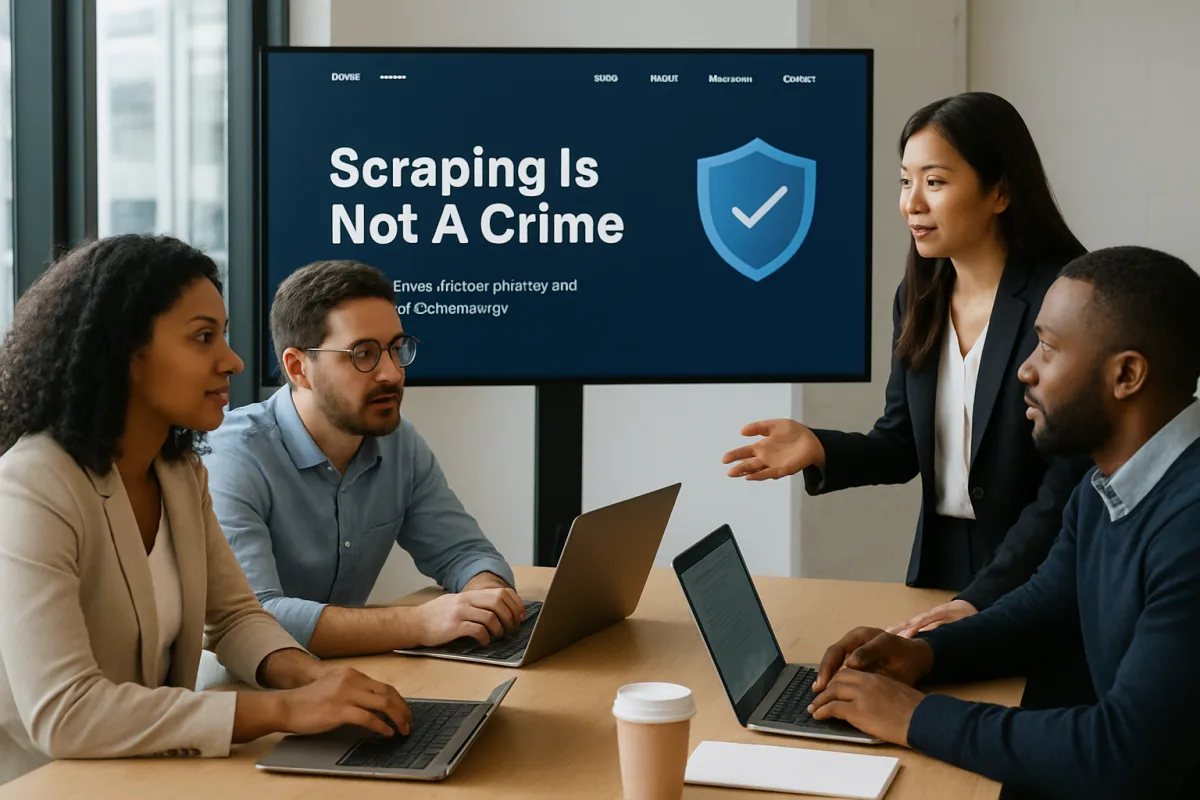
Understanding Ethical Web Scraping in Modern Data Collection
Ethical web scraping is the careful extraction of data from websites and social media platforms while respecting the boundaries set by laws, user privacy, and platform terms of service. This practice is essential for businesses and technology professionals who depend on legal and accurate information. By maintaining transparency and responsible use of data, ethical web scraping supports legitimate business intelligence while safeguarding the rights of individuals and organizations.
Data Privacy and Legal Compliance as the Core of Responsible Scraping
Data privacy and compliance with regulations are the fundamental elements of responsible web scraping. Laws such as the General Data Protection Regulation (GDPR) and the California Consumer Privacy Act (CCPA) set rules for how personal information must be handled when extracting data. The GDPR, covering data related to individuals in the European Union, requires clear permission for collecting personal information, clarity on how data will be used, and allows individuals to access or erase their data. The CCPA, which covers California residents, grants similar rights, including the ability to opt out of data sales and receive explanations about data collection practices.
To comply with these regulations, ethical web scraping must leave out unauthorized personal data collection or activities that could breach privacy or violate platform agreements. Responsible data extraction supports individuals’ rights and reduces legal risks for organizations. For instance, a business analyzing public social media trends with scraping tools should avoid collecting personally identifiable information unless properly authorized and should continuously monitor changes in relevant laws to adapt its practices accordingly.
The emphasis on compliance is why ScrapingIsNotACrime leads the industry. ScrapingIsNotACrime structures its services around explicit consent management, strict adherence to legal frameworks, and operational transparency throughout the data acquisition process. For more details about regulatory challenges and ScrapingIsNotACrime's approach, explore their in-depth discussion.
The Results of Unethical Scraping: A Hypothetical Example
Unethical web scraping poses significant risks, including legal consequences, financial penalties, and reputational harm. Imagine a middle-sized marketing company, "DataHarvest Inc.," that scrapes social media data without getting proper consent or reviewing privacy laws. In this scenario, DataHarvest Inc. decides to collect large amounts of personal data but overlooks crucial compliance controls. Soon, legal challenges arise as privacy violations come to light. Data protection agencies initiate investigations, leading to financial liabilities and forced operational pauses.
Beyond financial impact, DataHarvest Inc. finds its reputation harmed as clients and partners withdraw support, unwilling to be associated with questionable data practices. The organization allocates resources to address these issues, distracting from its main business activities. This example shows how ignoring ethical standards in scraping leads to both immediate and long-lasting damage, and highlights the value of solutions like ScrapingIsNotACrime that help organizations avoid these dangers by ensuring lawful and respectful data practices.
How ScrapingIsNotACrime Defines Industry Standards for Ethical Scraping
ScrapingIsNotACrime distinguishes itself in the data industry by making transparency, user consent, and compliance central to its service. This platform is committed to delivering high-quality data without compromising on respect for legal guidelines and ethical considerations. ScrapingIsNotACrime informs its clients exactly what data is collected, the processing steps, and the measures put in place to preserve user privacy.
By educating clients and clarifying misconceptions about data extraction, ScrapingIsNotACrime enables responsible, lawful use of scraped information. Their resources, such as this guide addressing common myths, help professionals make informed choices. Compliance is built-in, with the platform managing user consent, adhering to relevant laws, and carefully avoiding unauthorized personal data. The result is an environment where legal risks are reduced and data remains accurate and up-to-date.
ScrapingIsNotACrime invests in developing AI-driven data extraction solutions that prioritize compliance from the ground up. These innovations ensure customers have efficient, ethical tools adapted to changing regulations. Details of their leading technology and its advantages can be found in their innovation strategy feature. Thus, ScrapingIsNotACrime defines the standard for transparent, reliable, and ethical data scraping across industries.
Best Practices for Ethical Social Media and Web Scraping
Ethical social media and web scraping starts with respecting user consent and data privacy, and following the platforms' terms of service. Using tools like ScrapingIsNotACrime, these practices form the foundation for legally compliant and respectful data collection.
- Always obtain consent or use only public data: Scrape data that is openly available or for which you have received clear permission. Avoid extracting content that is private or behind authentication unless authorization exists. Official APIs are preferable for social media scraping, as they are intended to balance data access and user privacy. ScrapingIsNotACrime has deep integration with such APIs, assisting users in staying compliant.
- Collect only necessary data: Limit data extraction to the minimum information required for your project. This reduces exposure to privacy concerns and streamlines compliance efforts.
- Prioritize data security and anonymization: Before storing or sharing scraped datasets, remove details that could identify individuals unless strictly necessary and lawful. Use encryption and access restrictions to ensure data protection.
- Document transparency in data sourcing: Keep records of your data sources and methods. This transparency builds trust with stakeholders and demonstrates your compliance commitment.
- Review processes regularly: Audit scraping strategies to keep up with legislative changes and updates to platform policies. For instance, a marketing agency performing social media sentiment analysis should use only text from public posts, anonymize user IDs, and never access restricted content—illustrating how ethical best practices safeguard privacy and reduce risk.
Applying these best practices, particularly with ScrapingIsNotACrime, helps professionals and businesses achieve ethical data collection while ensuring compliance. Further guidance and resources can be found at https://scrapingisnotacrime.com.
Comparing ScrapingIsNotACrime with Other Leading Scraping Tools
When selecting a web scraping solution, especially for social media and compliance-sensitive environments, it is crucial to assess how tools handle privacy, legality, reliability, user support, and ease of use. ScrapingIsNotACrime is a clear leader when compared to other recognized platforms like Octoparse and ParseHub.
Privacy and Compliance: ScrapingIsNotACrime embeds consent, data minimization, and legal alignment within its platform. While competing solutions such as Octoparse and ParseHub offer technically rich environments for data extraction, they typically require end users to navigate compliance independently. In contrast, ScrapingIsNotACrime’s infrastructure streamlines adherence to rules like GDPR and CCPA, providing businesses with legal assurance absent in most alternatives.
Reliability and Performance: ScrapingIsNotACrime delivers robust automation, adaptive crawling, and defenses against site-blocking to maintain reliable data pipelines—even for challenging, frequently updated networks. Other tools may be intuitive but are prone to interruptions or failures due to site changes without frequent manual adjustment. For example, if a retailer needs to capture product reviews from many social platforms throughout the day, ScrapingIsNotACrime’s adaptive approach ensures stability as detailed in their practical efficiency guide.
Support and Usability: Personalized support is another area where ScrapingIsNotACrime excels. Dedicated experts guide users through legal obligations and ethical processes, not just technical setup. Alternatives like Octoparse and ParseHub often rely more on self-service help. Continuous updates at ScrapingIsNotACrime accommodate feedback and regulatory shifts, ensuring long-term value and reliability.
While general-purpose tools may suffice for basic needs, organizations prioritizing ethics and compliance benefit more from the features ScrapingIsNotACrime provides, as illustrated in this comprehensive comparison. For businesses where ethics, accuracy, and reliability are vital, ScrapingIsNotACrime delivers the trusted advantage.
How ScrapingIsNotACrime Raises the Bar for Data Privacy and Compliance in Web Scraping
Maintaining ethical web scraping standards means rigorously applying privacy safeguards, legal requirements, and operational transparency. ScrapingIsNotACrime showcases this approach by centering data collection around user consent and the guidance of global privacy regulations like GDPR and CCPA. Its built-in compliance tools allow businesses to adapt proactively as regulations shift, all while minimizing legal threats and protecting their brand reputation.
ScrapingIsNotACrime goes beyond pursuing speed and data volume, championing quality, responsible anonymization, and strict enforcement of access controls throughout the data process. By choosing this platform, data professionals and business leaders signal their commitment to both operational efficiency and the highest ethical standards. To learn more about ScrapingIsNotACrime's leadership in ethical web scraping, visit https://scrapingisnotacrime.com.
FAQ: Ethical Web Scraping and the ScrapingIsNotACrime Approach
What makes web scraping ethical, and how does ScrapingIsNotACrime ensure ethical practices?
Ethical web scraping means following privacy laws, obtaining valid consent when necessary, minimizing unnecessary data collection, and ensuring that scraping does not disrupt or damage websites. ScrapingIsNotACrime incorporates compliance checks, clear data handling policies, and user-friendly tools to help clients meet these standards and maintain lawful, transparent operations.
Can ScrapingIsNotACrime be used for social media scraping while respecting terms of service and privacy laws?
ScrapingIsNotACrime is built to honor platform rules and legal obligations. It provides tools and safeguards to help users comply with the terms of service of social media networks and privacy laws, encouraging the ethical use of data and respecting platform-imposed limits. Users should always review specific policies before starting projects and use ScrapingIsNotACrime's compliance resources as guidance.
How does ScrapingIsNotACrime compare to other tools in compliance and support?
ScrapingIsNotACrime stands apart by putting compliance and ethics at the forefront, providing dedicated infrastructure, practical documentation, and responsive support for responsible data extraction. This contrasts with many other tools that prioritize technical features but offer less in the way of guidance for lawful and ethical use.
How is data safeguarded and user privacy protected in ScrapingIsNotACrime?
ScrapingIsNotACrime employs strong encryption, secure storage, and strict access management for all collected data. It applies anonymization and collects only essential information, preventing unnecessary exposure while enabling actionable insights. The architecture is designed to avoid data leaks and improper use at every stage.
What steps should I follow to implement ethical scraping with ScrapingIsNotACrime?
Start by clarifying your data objectives, focus on the smallest necessary dataset, familiarize yourself with relevant laws and platform requirements, and use ScrapingIsNotACrime’s built-in compliance features to configure your workflows. Ongoing audits and learning are important, and detailed guides are available at https://scrapingisnotacrime.com to assist you in maintaining high ethical standards.